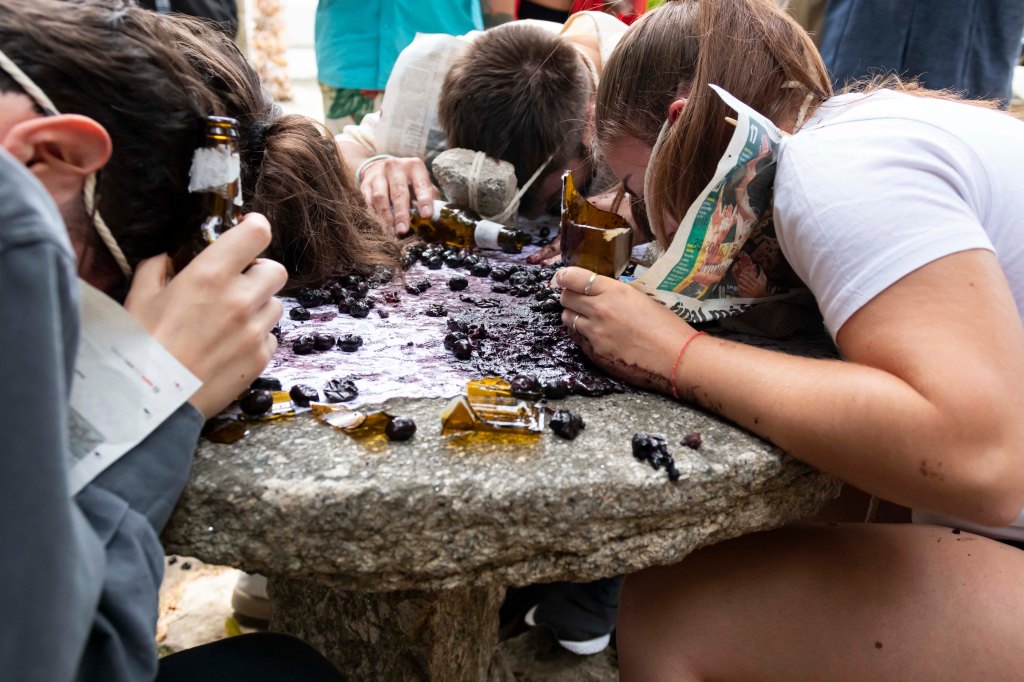
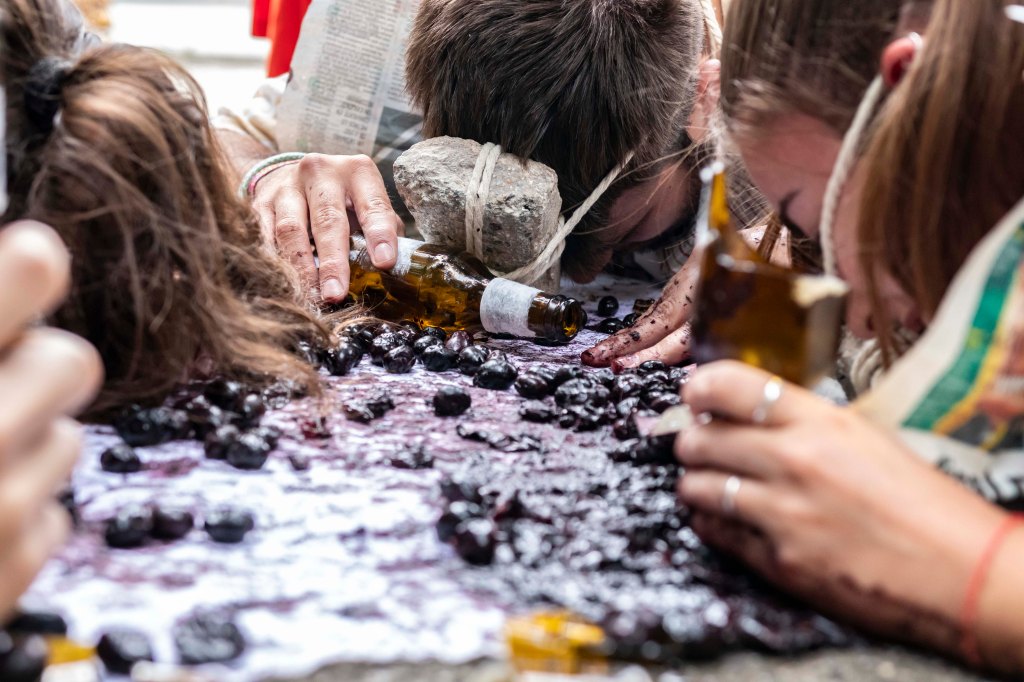
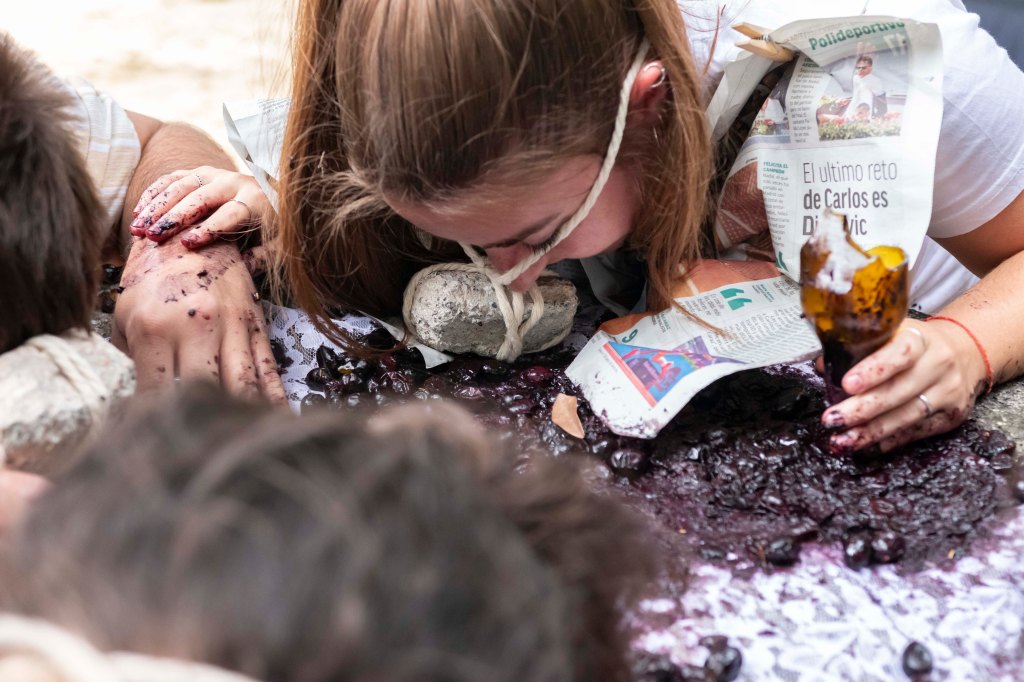
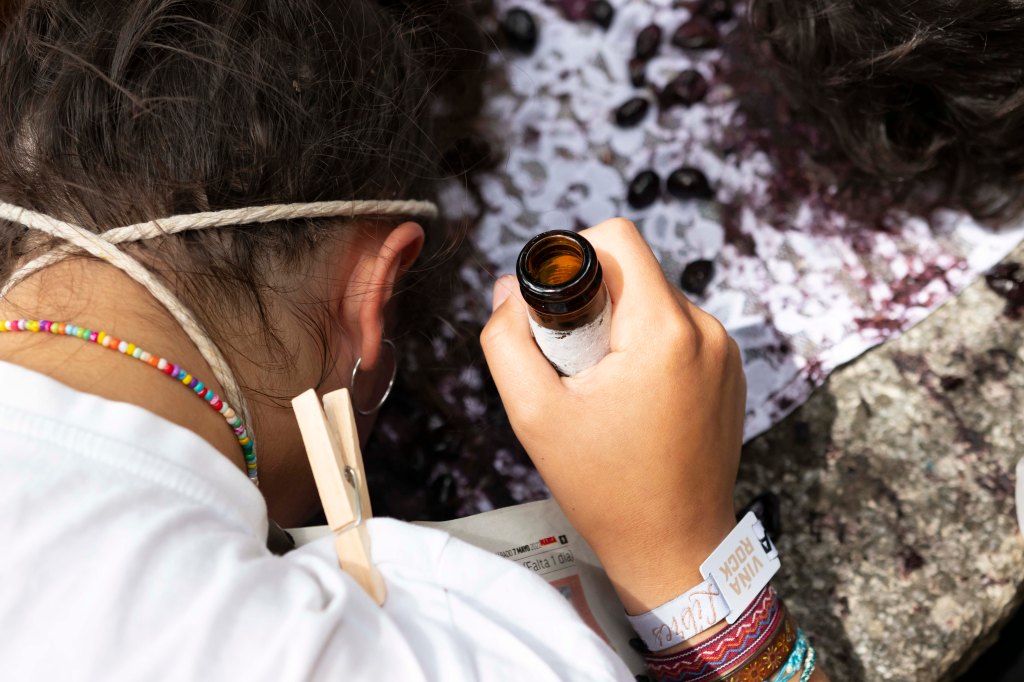
«La virgen de la amargura no tiene cura» fue una performance que presentamos María Jiménez, Lucía Méndez, Sergio Sánchez y yo en el Encontro da Associaçao de Professores de Expressão e Comunicação Visual en Viseu, Portugal (2022).
En Jaén (y me imagino que en muchas zonas donde se cultiva la aceituna) hay una tradición que consiste en machacar la aceituna para poner en agua y quitarle el amargor. Pasadas un tiempo en remojo se aliñan y así se pueden comer sin hacer guiños. Yo me acuerdo de mi abuelo que cuando llegaba la época de la aceituna de cornicabra preparaba en el patio interior una cuba con agua, una tabla de madera y un botellín de cerveza y pasaba la tarde machacando las aceitunas. Recuerdo perfectamente el sonido el martilleo contra la tabla y el arrastre para lanzarlas a la cuba de agua.
La historia es que lo que para muchos en Jaén es un patrimonio y un orgullo identitario y patrio, para otras personas, sobre todo para les jornaleres y personas de clase trabajadora configura un muro para sus esperanzas de progreso y para ver mejoradas sus condiciones materiales (esto se debe principalmente al latifundismo y las pésimas condiciones laborales). Por esto mismo el olivar para un joven jiennense de clase trabajadora no es más que un territorio que machaca sus expectativas de una vida mejor.
Así que cómo jovenes amargadas quisimos quitarle el amargor a la aceituna para siempre. fuck you olivar, por nosotras que se pudran todos los olivos de Jaén.
“La virgen de la amargura no tiene cura” was a performance presented by María Jiménez, Lucía Méndez, Sergio Sánchez and myself at the Encontro da Associação de Professores de Expressão e Comunicação Visual in Viseu, Portugal (2022).
In Jaén (and I imagine in many areas where olives are grown), there is a tradition that consists of crushing the olives, soaking them in water to remove their bitterness. After some time in brine, they are seasoned and can then be eaten without making you wince. I remember my grandfather clearly: when cornicabra olive season arrived, he would set up a large tub of water in the inner courtyard, a wooden board, and a small bottle of beer, and he would spend the afternoon crushing olives. I vividly remember the sound of the pounding against the wood and the scraping motion as he tossed them into the tub of water.
The story is that what for many people in Jaén represents heritage, pride, and patriotic identity, for others—especially jornaleres and working-class people—constitutes a wall that blocks their hopes for progress and for improving their material conditions (mainly due to latifundismo and appalling labor conditions). For this reason, the olive grove, for a young working-class person from Jaén, is nothing more than a territory that crushes their expectations of a better life.
So, as bitter young people, we wanted to remove the bitterness from the olive once and for all. Fuck you, olive grove—may all the olive trees of Jaén rot.